

Regenerative Medicine: Exploring the Costs and Benefits of Stem Cell Therapy sets the stage for this enthralling narrative, offering readers a glimpse into a story that is rich in detail and brimming with originality from the outset.
As we delve deeper into the realm of regenerative medicine and stem cell therapy, we uncover a world of innovative treatments and potential breakthroughs that hold promise for the future of healthcare.
Overview of Regenerative Medicine and Stem Cell Therapy
Regenerative medicine is a field of medical science that focuses on restoring damaged tissues and organs within the body to promote healing and recovery. Stem cell therapy, a key component of regenerative medicine, involves using stem cells to replace or repair damaged cells, tissues, or organs in the body. These stem cells have the unique ability to differentiate into various types of cells, making them a valuable tool in medical treatments.Role of Stem Cell Therapy in Regenerative Medicine
Stem cell therapy plays a crucial role in regenerative medicine by harnessing the regenerative potential of stem cells to treat a wide range of medical conditions. These stem cells can be used to repair damaged tissues, promote healing, and regenerate organs that have been affected by injury, disease, or aging. By introducing these healthy stem cells into the body, medical professionals aim to facilitate the natural healing process and restore normal function to the affected areas.- Stem cell therapy can be used to treat conditions such as cardiovascular diseases, neurodegenerative disorders, orthopedic injuries, and autoimmune disorders.
- Stem cells have the ability to differentiate into specialized cell types, such as heart muscle cells, nerve cells, bone cells, and blood cells, allowing them to repair and regenerate specific tissues and organs.
- By promoting tissue regeneration and repair, stem cell therapy offers the potential for long-term functional improvement and symptom relief in patients with chronic and degenerative conditions.
Types of Stem Cells Used in Therapy
Stem cell therapy in regenerative medicine utilizes different types of stem cells, each with unique characteristics and potential benefits for treating various medical conditions.Embryonic Stem Cells
Embryonic stem cells are derived from embryos and have the ability to differentiate into any type of cell in the body. They are considered pluripotent, offering a wide range of possibilities for tissue regeneration and repair. However, the use of embryonic stem cells raises ethical concerns due to the destruction of embryos during the harvesting process.Adult Stem Cells
Adult stem cells are found in various tissues of the body, such as bone marrow, adipose tissue, and the umbilical cord. These cells are multipotent, meaning they can differentiate into a limited range of cell types. Adult stem cells are less controversial than embryonic stem cells and can be obtained from the patient's own body, reducing the risk of rejection.Advantages and Disadvantages
- Embryonic stem cells have the potential to differentiate into any cell type, making them highly versatile for regenerative purposes. However, ethical concerns and the risk of rejection limit their widespread use. - Adult stem cells are less controversial and pose a lower risk of rejection since they can be obtained from the patient's own body. However, their limited differentiation potential may restrict their applicability in certain medical conditions.Applications of Stem Cell Therapy
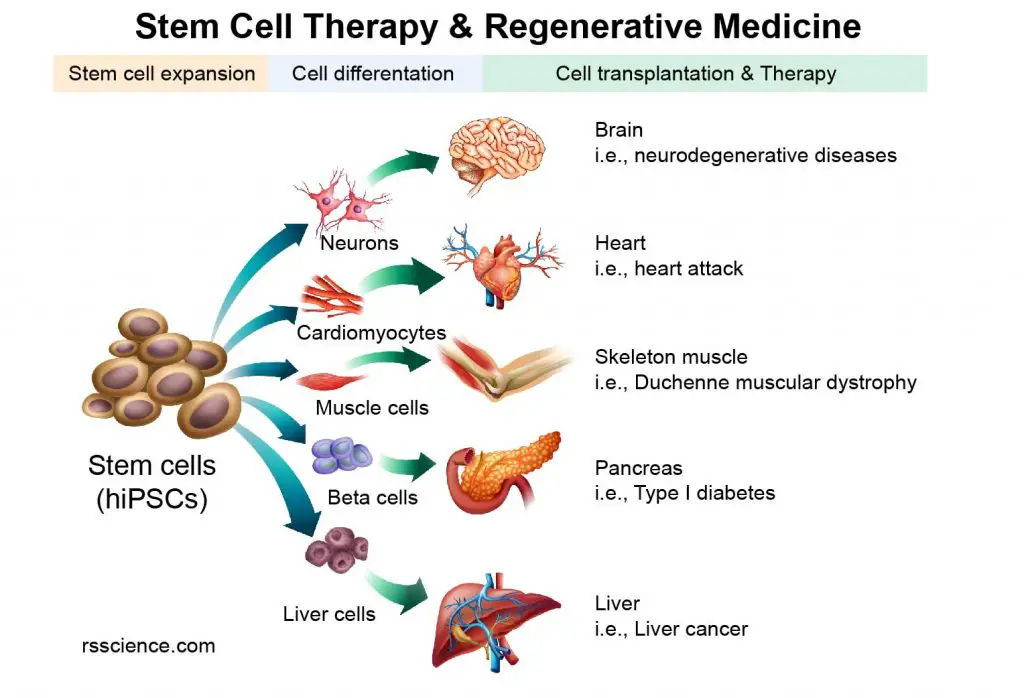 Stem cell therapy has a wide range of applications in medicine, offering promising solutions for various diseases and conditions. It plays a crucial role in tissue regeneration, repair, and potentially revolutionizing healthcare in the future.
Diseases and Conditions Treated with Stem Cell Therapy
- Leukemia: Stem cell transplants are commonly used to treat leukemia, a type of blood cancer.
- Spinal Cord Injuries: Stem cells are being studied for their potential to repair damaged spinal cord tissue and improve function.
- Heart Disease: Stem cell therapy is being explored as a treatment for heart conditions, such as myocardial infarction, to regenerate damaged heart tissue.
Use of Stem Cell Therapy in Tissue Regeneration and Repair
- Orthopedic Injuries: Stem cells are used to promote the healing of bone, cartilage, and ligament injuries.
- Skin Wounds: Stem cell therapy can accelerate the healing of wounds and promote skin regeneration.
- Neurological Disorders: Stem cells show promise in repairing damaged nerve tissue in conditions like Parkinson's disease and Alzheimer's.
Future Potential Applications of Stem Cell Therapy
- Organ Regeneration: Researchers are exploring the possibility of growing organs from stem cells for transplantation, potentially solving the organ donor shortage.
- Anti-Aging Treatments: Stem cell therapy may hold the key to reversing the effects of aging by regenerating tissues and organs.
- Personalized Medicine: Stem cell technology could lead to personalized treatments tailored to an individual's genetic makeup for more effective and targeted therapies.
Cost Considerations of Stem Cell Therapy
Stem cell therapy is a promising treatment option for various medical conditions, but it comes with a significant price tag. Understanding the factors that contribute to the cost of stem cell therapy, comparing the costs of different treatments, and exploring the affordability and accessibility for patients are crucial aspects to consider.
Factors Affecting the Cost of Stem Cell Therapy
- The type of stem cells used: The source and type of stem cells utilized in therapy can greatly impact the overall cost. For instance, embryonic stem cells are typically more expensive than adult stem cells.
- Treatment protocol and dosage: The complexity of the treatment plan, the number of doses required, and the duration of therapy can all influence the overall cost.
- Medical facility and expertise: The reputation of the medical facility, the expertise of the healthcare providers, and the use of state-of-the-art equipment can contribute to higher costs.
Cost Comparison of Different Stem Cell Treatments
- Autologous stem cell therapy: This type of treatment, where the patient's own stem cells are used, tends to be less expensive compared to allogeneic stem cell therapy, which involves donor cells.
- Stem cell injections vs. stem cell transplant: The cost of a single injection of stem cells for localized treatment may be lower than a full stem cell transplant procedure, which requires more extensive medical intervention.
Affordability and Accessibility of Stem Cell Therapy
- Insurance coverage: In some cases, health insurance may cover a portion of the cost of stem cell therapy, depending on the specific treatment and the insurance provider.
- Out-of-pocket expenses: Patients without insurance coverage may face significant out-of-pocket expenses for stem cell therapy, making it less accessible for those with limited financial resources.
- Research and clinical trials: Participating in research studies or clinical trials for stem cell therapy may offer a more affordable option for patients while contributing to the advancement of medical science.
Last Word
In conclusion, the exploration of regenerative medicine and stem cell therapy reveals a landscape of hope and progress in the field of healthcare. This discussion underscores the transformative power of these cutting-edge technologies and their potential to revolutionize medical treatments for generations to come.
Q&A
What are the common side effects of stem cell therapy?
Side effects of stem cell therapy may include infection, allergic reactions, and in some cases, tumors. It is essential to discuss potential risks with your healthcare provider.
Is stem cell therapy FDA approved?
While some stem cell treatments are FDA approved, many are still undergoing clinical trials. It is crucial to ensure that any stem cell therapy you consider is conducted under proper regulations and with proven efficacy.
Can stem cell therapy cure all diseases?
Stem cell therapy shows promise in treating various diseases and conditions, but it is not a cure-all. Its effectiveness depends on the specific condition being treated and individual factors.

